October 21, 2026
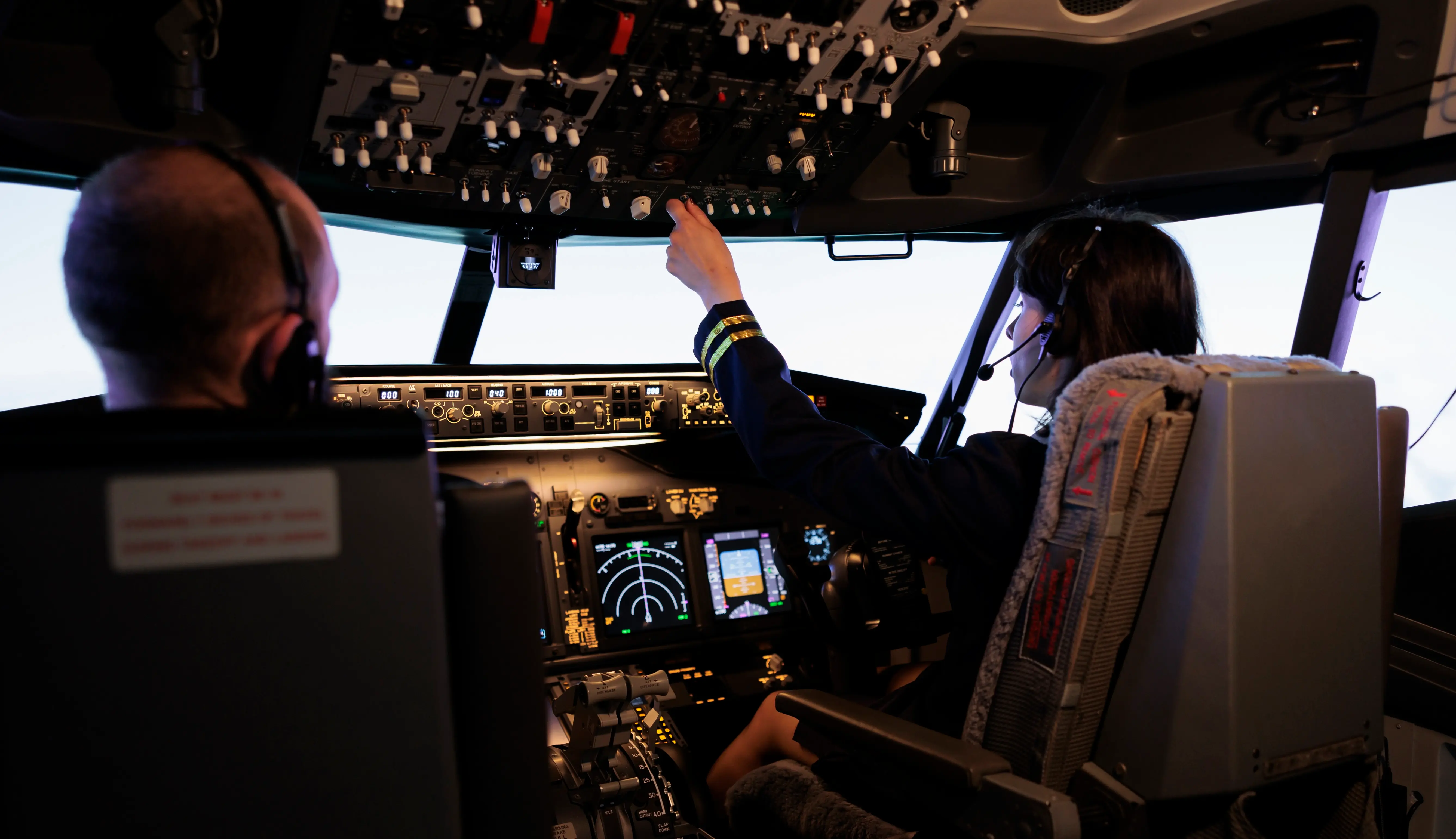
Commercial aviation is today one of the safest ways to travel on the planet, and it reached that level not by eliminating the risk inherent to flight, but by transforming the way it treats error, failure and the near miss. Industrial safety deals daily with hazards of comparable severity and has much to learn from this journey, and most of the lessons require neither turbines nor wings to make a direct impact on the shop floor.
The common tendency is to attribute aviation's success to technological sophistication. Yet the real explanation lies in the organisational habits developed over decades: processes designed to turn every deviation into an opportunity for collective learning. It is precisely in the human factor and operational discipline that the parallel with industry becomes clear.
At a recent event hosted by Glartek, the EHSQ Executive Brief, Captain José Correia shared how these practices were conceived to go beyond the cockpit and underpin any critical operation. His reflections guide this article not as theory, but as the lived experience of someone who operated under these principles throughout an entire career.
Discover the highlights from the EHSQ Executive Brief
Aviation's historic turning point rested on a clear premise: to institutionalise learning from failure instead of concealing it. In the United States, NASA runs the Aviation Safety Reporting System (ASRS), a voluntary, confidential and non-punitive channel through which pilots, controllers and crews report incidents and deviations. In exchange for transparency, whoever submits the report is shielded from disciplinary sanctions, removing the main barrier to reporting: the fear of punishment.
The rationale behind this system rests on an inescapable fact: more than two thirds of air accidents originate in human performance and coordination failures, not in purely mechanical faults. If problems arise from the interaction between people and complex systems, punishing operators only ensures that failures stop being reported. The ASRS reverses this paradigm by feeding a public database that maps systemic vulnerabilities before they culminate in a disaster.
As the captain sums it up, whenever a serious event occurs, the industry studies the case in depth and recreates the scenario in the simulator. Learning from someone else's error before repeating it is one of the sector's most effective routines. For industry, the parallel is direct: an operation only learns from its own warning signs if there is a simple and safe channel to log deviations and near misses. Without that channel, the occurrence is lost and, with it, the opportunity for prevention.
At the root of this approach lies the principle of Just Culture: the deliberate distinction between involuntary human error and gross negligence or the deliberate violation of procedures. In an organisation that practises Just Culture, reporting a slip does not trigger automatic reprisals; the focus falls on the systemic conditions that made the error likely, not on individual blame.
This is the point of greatest convergence between aviation and industrial safety, and often the hardest to consolidate in factories used to treating a report as an admission of guilt. The near miss is not a mere bureaucratic burden: it is the cheapest early warning a factory can obtain.
Captain José Correia illustrates this commitment with a personal episode: after an approach with an incorrect braking configuration on landing at Funchal, which resulted in two burst tyres, he reported it immediately to fleet management. Rather than a sanction, the report gave rise, weeks later, to an anonymous operational alert distributed to the whole company about the risks of system selection on that runway. The individual error was turned into collective protection.
Another pillar of aviation is the systematic distrust of memory and experience in isolation. Regardless of how many flight hours they have accumulated, no pilot takes off relying only on what they have memorised. Every critical phase is preceded by a checklist carried out in two voices (challenge-and-response), which stops routine and overconfidence from obscuring essential steps under pressure.
This practice inspired medicine when the surgeon Atul Gawande drew on aviation checklists to devise the WHO Surgical Safety Checklist, an experience he would later recount in The Checklist Manifesto and which took the model to operating theatres worldwide. In aviation, the golden rule translates into the principle of fly by the book: strict compliance with standard operating procedures, in which improvisation is expressly rejected.
In the industrial context, instruments such as Permits to Work (PTW), lockout/tagout (LOTO) and line start-up and shutdown routines work, in practice, as checklists. The lesson aviation offers lies in the rigour of their application: these instruments are not mere administrative formalities, but inviolable safety barriers.
Countless accidents in aviation history were made worse because co-pilots or flight engineers identified imminent hazards but felt inhibited from challenging the captain's authority. In response to this phenomenon, amplified after the Tenerife disaster in 1977, the sector structured Crew Resource Management (CRM).
Captain José Correia prefers to call the concept Company Resource Management: a leadership and communication methodology applicable to any command centre, production line or manufacturing unit. Two principles stand out for their immediate applicability:
On the shop floor, this mechanism takes shape when a line operator detects an unsafe condition and holds the authority to stop the task without fear of retaliation. Giving an active voice to those closest to the firing line does not undermine the hierarchy; it makes the operation resilient.
Aviation has stopped depending on post-mortem investigation to design its safety. Through the Safety Management System (SMS), a global standard established by ICAO, risk management has come to rely on predictive indicators (leading indicators), identifying trends of operational degradation before they manifest in accidents.
The evolution of industrial safety with the ISO 45001 standard follows this same trajectory: moving from a purely reactive logic focused on the retrospective counting of injuries and lost workdays to a predictive culture that acts on weak signals.
This stance translates into the maxim of "staying ahead of the aircraft", anticipating deviations before they occur. It also involves managing biological limits such as human fatigue, a factor that predisposes to critical errors in continuous industry and shift regimes. Proactive safety begins by recognising where the operator's capabilities end and ensuring that the system does not push them beyond that threshold.
The safety achieved by civil aviation does not stem from any inaccessible technological mystery. It results from the combination of two practical pillars:
Without the data, there is no evidence to analyse. Without a culture of trust, the data never even gets logged.
It is at this point that technology becomes an enabling force. Digital EHSQ platforms designed for the frontline operator remove the bureaucratic friction of paper forms: logging a safety observation, a near miss or a lockout takes seconds, on a phone or an industrial tablet. The immediate structuring of that information allows operational management to distinguish noise from critical vulnerabilities and to act with surgical precision.
Aviation did not reach historic levels of reliability because it stopped making mistakes; it reached them because it institutionalised the courage to talk about mistakes. That is the leadership decision any industrial operation can start to make today.
The hidden cost of manual audit preparation
2026-10-14
The hidden cost of reactive safety
2026-09-30
See how Glartek helps you capture data at source and make reporting safe and simple